



The Lickanantay people have lived in Chile’s Atacama Desert for more than 15,000 years, developing an oasis culture characterized by scarcity and fragility. In extreme climatic conditions, the Lickanantay managed to diversify plant and animal life in salt flats, lagoons and rivers, thanks to their astronomical observations.
In this same territory, located on high hills, there are more than twenty international astronomical observatories. In addition to these scientific facilities, Atacama is home to a number of extractive industries, mainly copper and lithium, minerals that are indispensable for global technology production and whose extraction process has caused high levels of pollution in ecosystems, serious diseases in the population and drought.
The aim of the project is to analyze the oasis as a future technology that connects astronomy, ecological care, social vision and economics in the face of future scenarios of water scarcity. Textiles will be used as a technology that stores and transmits information between the various forms of life on earth and in the sky.
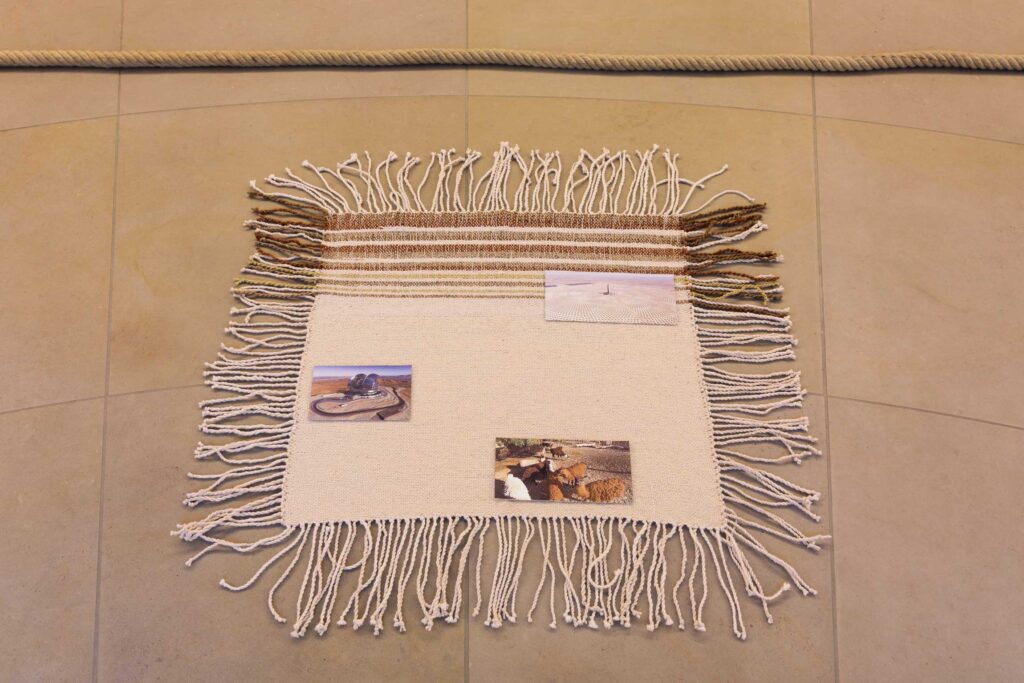
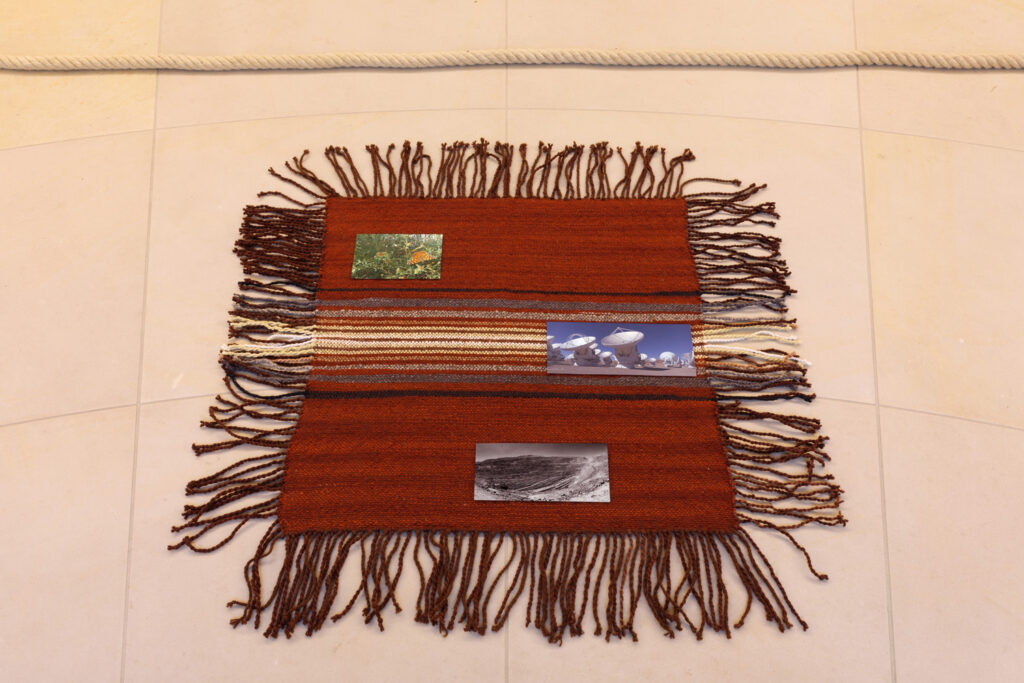
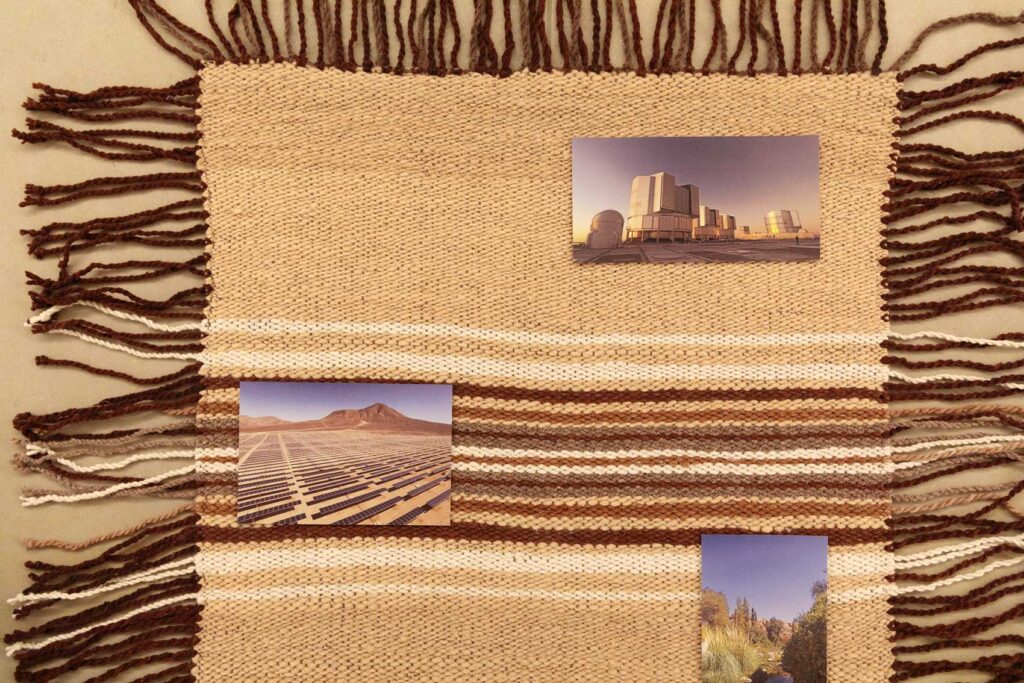
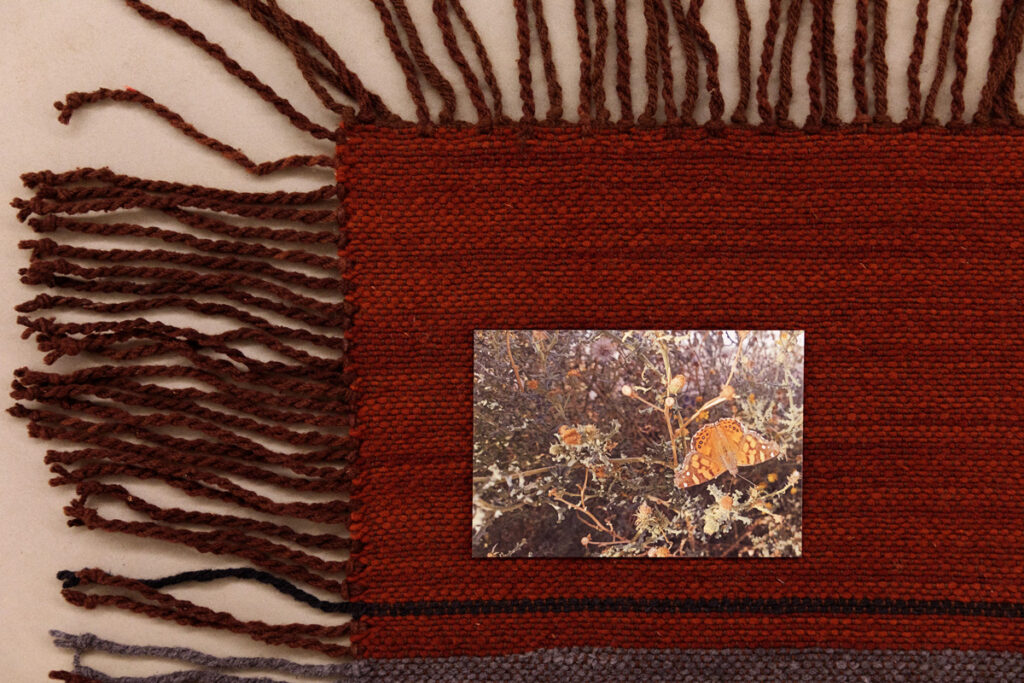
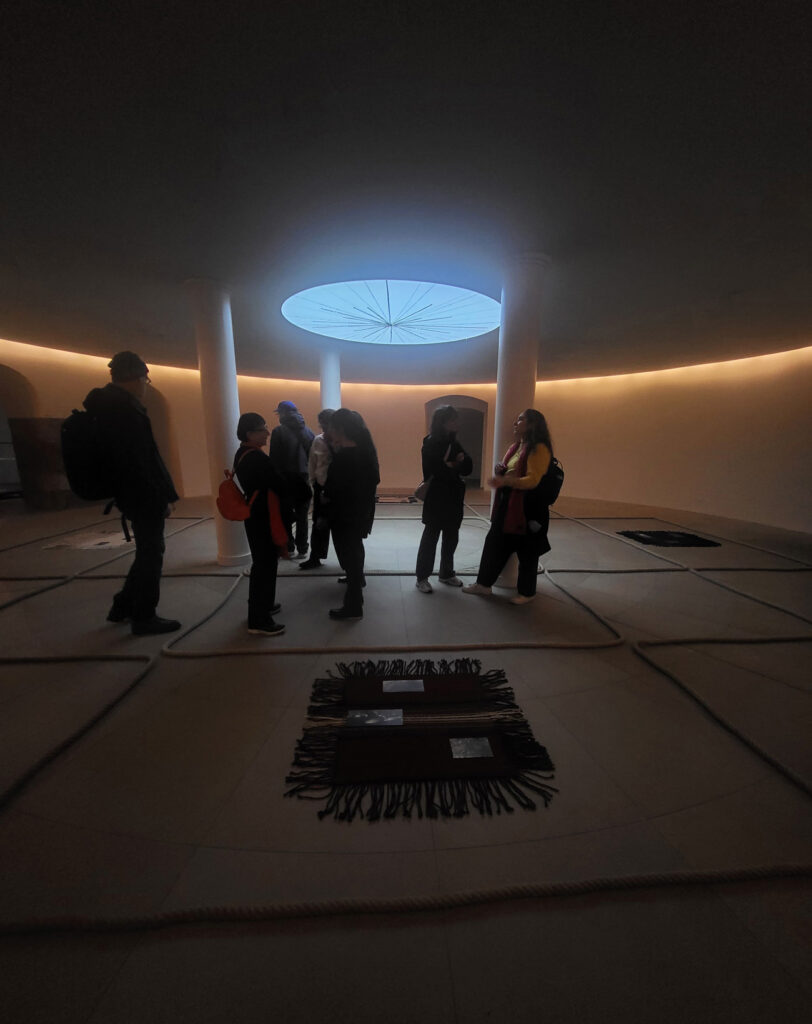
A site-specific installation was created at the Tieranatomischen Theater TA T (Animal Anatomy Theater). Based on the central circumference of the room, the size was calculated to form a Chakana cross on the floor of the room with a 100-meter-long rope. A fabric was installed on the floor on each of its four outer sides; these four textiles were woven by the Suyis Liq‘ cau women’s group from the Antofagasta region of Chile. The textiles depict the cycle of a day: sunrise, noon, sundown and night. Their colors are oriented towards the llamas, sheep, plants and soils of the Atacama Desert. Archival images by the artist related to extractive industries, astronomical observatories and the animals and plants that make up the cosmology of the oasis in her work were installed on each fabric.
The Chakana is the most important constellation in Andean culture, consisting of four stars that can be seen from the southern hemisphere. Chakana is a word from the Quechua language: chaka meaning bridge and na meaning tool. It is an astronomical formation in which the position of the four stars coincides with the four cardinal points.
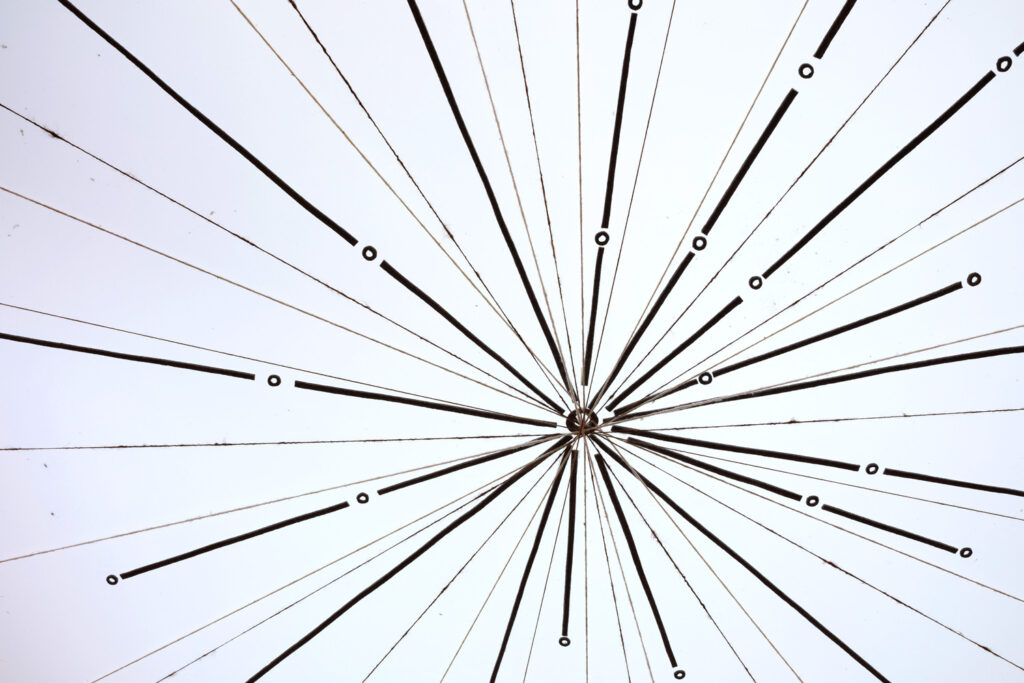
On a lamp in the center of the room, Marcela Moraga created a map of Ceques using felt, llama wool, and sheep wool. The Ceques consisted of imaginary lines that started from the Temple of the Sun (center of the Inca Empire in Cuzco, Peru) and extended to all the cities of the empire. The lines of the Ceques led to sacred places called Huacas. These allowed for the observation of astronomical phenomena such as the full moon, equinox and solstice.
The site-specific installation was created as part of the Anatomia Publica residency and presented during the Science Week in Berlin, 2025. Curated by Paz Ponce Bustamante. Thanks to the support of astronomer Basilio Solís, researcher Agnes Stillger, artist Gonzalo Barahona, and carpenter Michael Wehmeier. Photos: Benjamin Renter
Lo que ocurre en el cielo, ocurre en la Tierra (what happens in the sky happens on earth) is quoted in the book “Conversaciones sobre el Etnoterritorio y Paisaje Cultural desde la Cosmovisión Lickanantay” by Esteban Araya Toroco (Conversations on Ethnoterritory and Cultural Landscape from the Lickanantay Cosmovision). Gobierno Regional de Antofagasta, 2021.